
Moving out of a rental property can be a whirlwind of packing, cleaning, and coordinating, but one crucial step that often gets overlooked in the rush is the formal communication regarding your security deposit. This important sum of money, held by your landlord, represents a significant financial safeguard for both parties, and ensuring its proper return requires clear and professional communication. It’s not just about getting your money back; it’s about maintaining a good record and facilitating a smooth transition for everyone involved.
For landlords, providing a detailed accounting of the security deposit is a legal and ethical obligation. For tenants, receiving this clarity is essential for understanding any deductions and confirming the balance. Crafting this letter from scratch every time can be time-consuming, which is why having a reliable framework, like a security deposit return letter template, can simplify the entire process and ensure no critical details are missed.
Understanding the Essentials of a Security Deposit Return Letter
A security deposit return letter isn’t merely a polite note; it’s a formal document that serves as a crucial record of the financial transaction between a landlord and a tenant at the end of a lease term. Its primary purpose is to clearly outline the final disposition of the security deposit, whether it’s being returned in full, partially, or withheld entirely. For both parties, this letter provides an official paper trail, which can be invaluable in preventing misunderstandings or resolving potential disputes down the line. It clearly states the final financial obligations and confirms that the move-out process is formally concluded.
Without a comprehensive letter, there’s room for confusion about what was deducted, why, and when the remaining balance will be received. This can lead to frustration for tenants and potential legal challenges for landlords if they fail to comply with state-specific regulations regarding deposit returns. A well-crafted letter demonstrates professionalism and adherence to legal requirements, fostering trust and ensuring transparency in the often-complex world of landlord-tenant relations. It acts as a formal record that both parties can refer to if any questions arise later regarding the condition of the property or the final accounting.
Ensuring your letter is thorough and includes all legally mandated information is paramount. Most states have specific laws dictating the timeframe within which a security deposit must be returned and the requirements for providing an itemized statement of deductions. Ignoring these regulations can result in penalties, sometimes even requiring the landlord to return double or triple the deposit amount. Therefore, approaching this communication with diligence and attention to detail is not just good practice but a legal necessity.
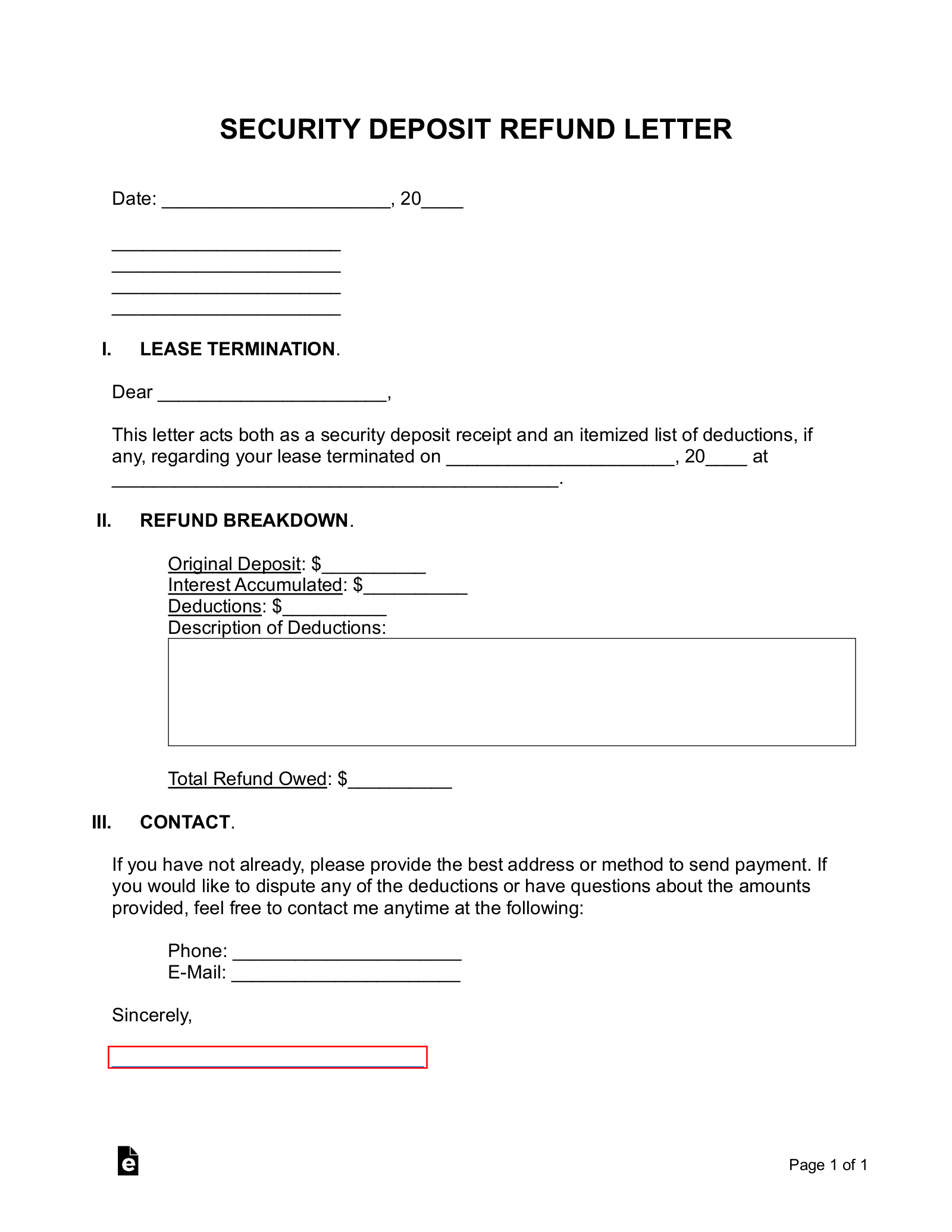
Key Information Points to Include:
- Tenant’s Full Name and Current Forwarding Address
- Landlord’s Full Name and Property Address
- Original Security Deposit Amount Paid by Tenant
- Date of Lease Termination and Move-Out Date
- Detailed, Itemized List of Any Deductions from the Deposit
- Specific Reason for Each Deduction (e.g., “repair of damaged wall in living room”)
- Cost Associated with Each Deduction (including receipts or estimates where applicable)
- Remaining Balance of the Security Deposit to be Returned
- Method of Refund (e.g., mailed check, direct deposit)
- Date the Letter is Sent and Landlord’s Signature
This comprehensive list ensures that the security deposit return letter addresses all necessary aspects, leaving little room for ambiguity. By consistently including these points, landlords can protect themselves from future claims and provide tenants with the clarity they deserve regarding their funds.
Navigating Different Scenarios with Your Return Letter
While the core components of a security deposit return letter remain consistent, the specifics will naturally vary depending on whether the deposit is returned in full, partially, or not at all. A robust security deposit return letter template should be adaptable enough to cover these different eventualities, providing clear guidance on how to phrase and itemize information for each situation. It’s about having a flexible framework that can be easily customized, ensuring accuracy and legal compliance no matter the circumstances of the tenancy’s end. This adaptability is key to making the template a truly useful tool for property management.
For instance, if the property is left in pristine condition and the full deposit is being returned, the letter can be quite straightforward. It would simply state the original deposit amount, confirm no deductions, and specify the method and date of the refund. This scenario is often the simplest, requiring minimal customization beyond filling in the basic tenant and landlord information and the refund details. The template ensures that even in this simplest case, all formal requirements are met, providing a clean record for both parties.
However, situations involving deductions require significantly more detail and justification. This is where the itemized list, previously discussed, becomes critically important. Landlords must be prepared to clearly explain each deduction, providing a reason and an associated cost. Whether it’s for cleaning beyond normal wear and tear, repair of tenant-caused damage, or unpaid rent/utilities, each item must be explicitly stated. Providing supporting documentation, such as invoices, receipts, or even before-and-after photos, can significantly strengthen the landlord’s position and minimize disputes.
State laws often dictate strict deadlines for returning security deposits and providing these itemized statements. Missing these deadlines or failing to provide adequate justification for deductions can lead to severe penalties for landlords, including being ordered to return the entire deposit regardless of damages, or even paying punitive damages. Therefore, having a reliable process, often facilitated by a comprehensive security deposit return letter template, ensures these critical timeframes and legal requirements are always met.
- **Full Refund Scenario:** A simple statement confirming the return of the entire original deposit, specifying the method (e.g., check) and date of dispatch. No itemization of deductions is needed, as none occurred.
- **Partial Refund Scenario:** This requires a clear, itemized list of every deduction made, including the exact amount for each and a detailed explanation of why it was withheld. The remaining balance is then stated, along with the refund method.
- **No Refund Scenario:** In cases where the entire deposit is withheld, the letter must provide a thorough, itemized breakdown of all costs that collectively exceed or equal the deposit amount. Detailed explanations and supporting documentation are crucial here.
Effectively managing the end-of-lease process, particularly the security deposit return, significantly contributes to positive landlord-tenant relations and avoids unnecessary legal complications. By utilizing a clear, well-structured communication method, both parties can ensure transparency and fairness. This attention to detail and adherence to proper procedure helps foster trust and makes for a smoother transition as tenants move on and landlords prepare for new occupants. It’s about building a foundation of professionalism that benefits everyone involved.
