
Sending a rejection letter after an interview is perhaps one of the least enjoyable tasks in the hiring process. It can feel awkward, and sometimes even a little bit uncomfortable, to deliver news that isn’t what someone hoped for. However, maintaining professional, empathetic communication throughout the entire candidate journey, even when the news isn’t positive, is absolutely crucial for your company’s reputation and for fostering a positive employer brand.
This article aims to simplify that challenging task. We’ll explore why a well-crafted rejection letter isn’t just a courtesy but a strategic tool, and we’ll provide you with a comprehensive rejection letter template after interview guidance to ensure you leave every candidate with a positive lasting impression, regardless of the outcome.
Why Sending a Rejection Letter Matters More Than You Think
Many companies fall into the trap of ghosting candidates, especially after initial interviews. While it might seem easier in the moment to simply move on, the long-term repercussions for your brand can be significant. A thoughtful rejection letter, even a brief one, shows respect for the candidate’s time and effort, reinforcing your company’s values of professionalism and consideration.
Think about it from the candidate’s perspective. They invested time preparing their application, perhaps took time off work for the interview, and spent energy envisioning themselves in the role. Silence after an interview can be incredibly frustrating and demoralizing, leading to negative reviews on platforms like Glassdoor and a damaged reputation in the talent market.
Beyond mere courtesy, a well-handled rejection can turn a disappointed candidate into a future advocate or even a future employee for a different role. Talent pools are often smaller than we think, and today’s unsuccessful candidate might be tomorrow’s perfect fit for another opening. Maintaining a positive relationship keeps that door open, ensuring you don’t burn bridges with potentially valuable individuals.
Moreover, in some jurisdictions, there can be subtle legal implications related to the perception of fair hiring practices. While a rejection letter isn’t a legal shield, consistent and respectful communication demonstrates a commitment to a professional and unbiased process, which is always a good practice. It helps to ensure that your recruitment process is transparent and that all applicants receive closure.
Key Elements of an Effective Rejection Letter
To ensure your rejection letters are both professional and empathetic, they should ideally include several core components. Each element plays a role in delivering the message clearly while preserving a positive candidate experience.
- A clear and direct statement of the decision, delivered kindly.
- Genuine gratitude for their interest in the position and for their time spent interviewing.
- Specific mention of the role they applied for to avoid confusion.
- An acknowledgement of their qualifications and experience, if appropriate and brief.
- An optional but often appreciated offer to keep their resume on file for future opportunities.
- A professional closing that wishes them well in their job search.
Crafting Your Perfect Rejection Letter Template After Interview
Now that we understand the importance of sending a rejection letter, let’s look at how to construct one that is both effective and compassionate. The key here is not just to deliver the news, but to do so in a way that preserves the candidate’s dignity and maintains a positive impression of your company. Personalization, even slight, can make a significant difference in how the message is received.
When you’re building a rejection letter template after interview, start with a framework that can be easily adapted. Avoid overly generic language. While you don’t need to provide extensive feedback on why they weren’t selected, a brief, positive acknowledgement of their skills or interview performance can soften the blow. Remember, the goal is not to justify your decision, but to communicate it respectfully.
Consider the stage of the interview process. A candidate who made it to a final round will likely warrant a slightly more personalized or detailed message than someone who was screened out after a phone interview. However, the core elements of gratitude and clear communication remain consistent across all stages. Always double-check for typos and grammatical errors; a polished letter reflects positively on your organization.
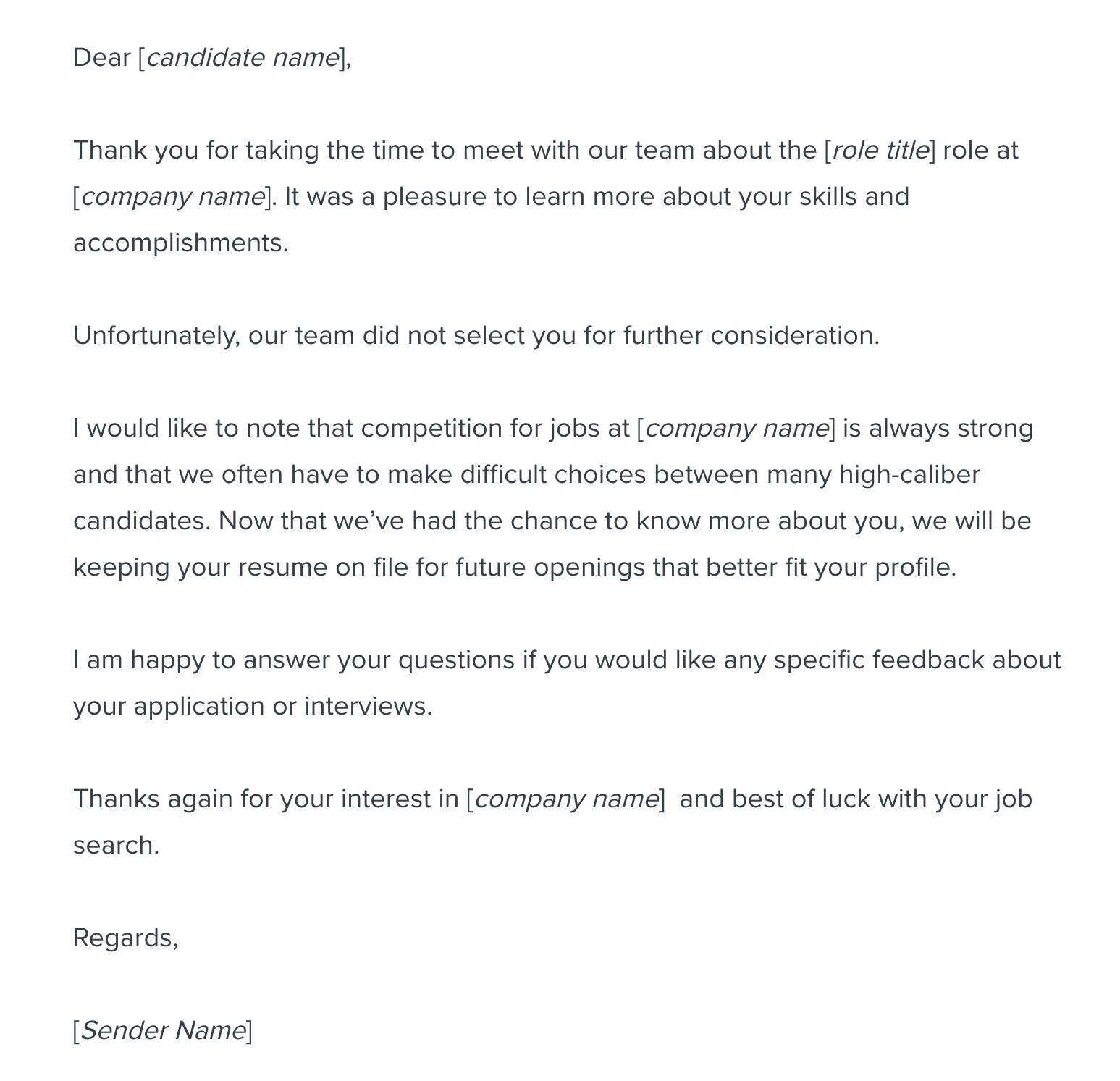
Here is a flexible rejection letter template after interview that you can adapt for your specific needs:
Dear [Candidate Name],
Thank you so much for your interest in the [Job Title] position at [Company Name] and for taking the time to interview with our team on [Date of Interview, if applicable]. We truly appreciated learning more about your experience, skills, and qualifications during our conversation.
We received a significant number of highly qualified applications for this role, and the decision was incredibly challenging. While your background and enthusiasm were certainly impressive, we have ultimately decided to move forward with other candidates whose qualifications and experience were a closer match for the specific requirements of this position at this time.
We understand this news may be disappointing, and we want to wish you the very best in your job search and future career endeavors. We encourage you to keep an eye on our careers page for any future opportunities that may align with your skills and career aspirations.
Thank you again for your interest in [Company Name].
Sincerely,
The [Company Name] Hiring Team
Remember to replace the bracketed placeholders with the relevant information for each candidate. This adaptable structure allows you to maintain consistency while adding the necessary personal touches that demonstrate genuine consideration for each applicant.
Sending a professional and empathetic rejection letter is more than just a formality; it is a critical component of a robust and respectable hiring process. By taking the time to craft a thoughtful response, you reinforce your company’s values, protect your brand’s reputation, and ensure that every candidate, regardless of outcome, leaves with a positive impression of your organization.
Embrace these guidelines and the provided template to transform what can be a difficult task into an opportunity to demonstrate your commitment to professionalism and respect. A little consideration goes a long way in building a strong employer brand and fostering positive relationships within the talent community.
