
Navigating the financial landscape of college can feel like a daunting task. You’ve applied, received your financial aid package, and perhaps it just isn’t quite enough to make your educational dreams a reality. This moment can be incredibly stressful, leaving many families feeling stuck or unsure of their next steps. The good news is that your initial financial aid offer isn’t always the final word.
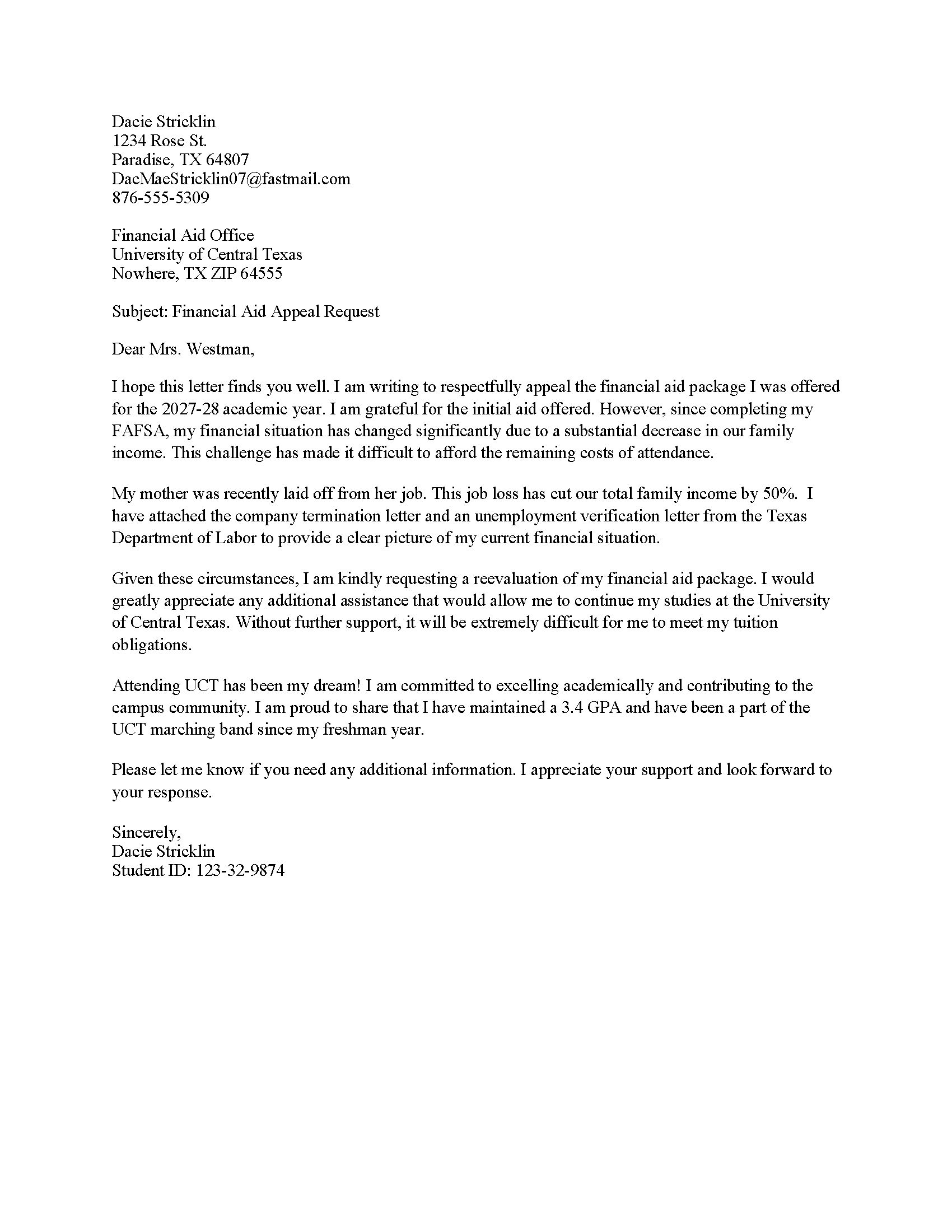
Many colleges and universities understand that circumstances can change or that the initial Free Application for Federal Student Aid FAFSA might not fully capture a family’s unique situation. This is where the power of an appeal comes into play. Crafting a compelling appeal letter is your chance to present your case, and starting with a solid financial aid appeal letter template can provide the structure and confidence you need to effectively communicate your story and request for additional support.
Understanding Your Grounds for Financial Aid Appeal
Before you even begin writing, it’s crucial to understand why you are appealing. Colleges are most likely to reconsider financial aid packages when there’s been a significant change in your family’s financial situation that wasn’t reflected on your initial application. Simply wanting more money isn’t usually enough; you need a legitimate reason backed by evidence. Thinking through your specific circumstances will not only help you articulate your request clearly but also guide you in gathering the necessary supporting documentation.
Perhaps there’s been a recent job loss, a significant reduction in income, or unforeseen medical expenses that have dramatically impacted your family’s ability to contribute to college costs. These are the kinds of "special circumstances" or "professional judgments" that financial aid offices are designed to evaluate. They want to help students who genuinely need it, but they need you to make a clear and well-supported case.
Common Reasons to Appeal
Appealing your financial aid decision can stem from various situations. Understanding these common grounds will help you frame your request appropriately:
- Changed Financial Circumstances: This is perhaps the most frequent reason for appeal. It includes situations where a parent or guardian has lost a job, experienced a significant pay cut, had a divorce or separation that impacts income, or suffered a natural disaster that led to substantial uninsured losses.
- High Medical or Dental Expenses: If your family has incurred significant out-of-pocket medical or dental expenses that weren’t covered by insurance, this can reduce your disposable income and warrant a reevaluation of your financial need.
- One-Time Income: Sometimes, a family’s income might appear high in a specific year due to a one-time event, such as a severance package, a pension distribution, or a large capital gain. If this income isn’t reflective of ongoing earnings, it’s a valid reason to appeal.
- Increased Dependent Care Costs: If there’s been an increase in the cost of caring for other dependents in the household, this can also affect a family’s ability to pay for college.
- Comparison to Other Offers: While not always successful, some students appeal by presenting a more generous offer from a comparable institution. This shows the college that you are serious about attending but need competitive aid.
Regardless of your reason, documenting your situation thoroughly is paramount. Gather pay stubs, medical bills, layoff notices, or any other official documents that substantiate your claims. The more evidence you provide, the stronger your appeal will be, making it easier for the financial aid office to understand and approve your request.
Crafting Your Persuasive Financial Aid Appeal Letter
Once you’ve identified your reasons and gathered your supporting documents, the next step is to put it all into words. While a financial aid appeal letter template can offer an excellent starting point for structure and tone, remember that personalization is key. Your letter needs to tell your unique story clearly, concisely, and respectfully. Think of it as a formal business letter, but one that also conveys your commitment to attending that specific institution.
Begin by addressing the letter to the appropriate financial aid officer or committee. This shows you’ve done your homework and are serious about the process. Clearly state your purpose for writing early in the letter—you are appealing your financial aid decision due to specific circumstances that were not adequately reflected in your initial application or have changed since then. Be direct and avoid emotional language, focusing instead on facts and how these facts impact your ability to pay.
The body of your letter is where you detail your specific situation. This is where those documents you gathered come into play. Explain what happened, when it happened, and how it has affected your family’s financial capacity. For example, if a parent lost their job, include the date of job loss, the impact on income, and any ongoing unemployment benefits or lack thereof. Be specific with numbers where possible, explaining how these new figures change your Expected Family Contribution EFC.
Conclude your letter by reiterating your strong desire to attend the college and thanking them for their time and consideration. You might also specify the amount of additional aid you believe you need, or ask if they could re-evaluate your package with a focus on grants or scholarships rather than loans. Always maintain a polite and appreciative tone throughout the entire letter. Remember to include your student identification number and contact information so they can easily reach you.
- Your full name and student ID number
- Date of writing
- The name and title of the financial aid officer or committee
- A clear statement of your appeal and the specific reason
- Detailed explanation of your changed financial circumstances
- Specific financial figures and how they impact your ability to pay
- A list of all enclosed supporting documents
- Your request for a specific amount or type of additional aid
- A professional closing and thank you
Before sending, proofread your letter carefully for any grammatical errors or typos. A well-written, error-free letter demonstrates professionalism and attention to detail. Follow any specific instructions the financial aid office might have for submitting appeals, such as preferred submission methods or additional forms. A thoughtful and well-prepared appeal significantly increases your chances of a positive outcome.
Colleges want to see their students succeed, and many are willing to work with families facing genuine financial hardship. Presenting a clear, well-supported case through a professional appeal letter can make a significant difference in making your education more affordable. It shows your dedication and proactive approach to overcoming challenges.
With careful preparation, a respectful tone, and a clear presentation of your circumstances, you are giving yourself the best possible chance to receive the additional financial support you need. Don’t be afraid to advocate for yourself and your educational future.
