
Navigating the world of emotional support animals (ESAs) can sometimes feel like a maze, especially for mental health professionals tasked with writing the necessary documentation. Clients often come seeking a letter that will allow their beloved companion to live with them in housing that typically has a no-pet policy, or sometimes for travel purposes, though those regulations have significantly changed. For therapists, providing this documentation is a crucial service that helps their patients maintain stability and well-being.
The challenge lies in ensuring these letters are not only compassionate and supportive but also legally compliant and professionally sound. A well-crafted letter requires specific information, presented clearly and concisely, to avoid misunderstandings or rejections from landlords and housing providers. This is where having a reliable framework, like an esa letter template for therapist use, becomes incredibly valuable, streamlining the process while maintaining accuracy and adherence to guidelines.
Understanding the Core Components of an ESA Letter
An emotional support animal (ESA) letter is more than just a note; it’s a formal document from a licensed mental health professional (LMHP) affirming that a patient has a mental or emotional disability and that the presence of an animal is necessary for their mental health. These letters are primarily used to request reasonable accommodation in housing under the Fair Housing Act, allowing individuals with disabilities to live with their ESAs even in places with pet restrictions. The letter essentially establishes a legitimate connection between the patient’s disability and the animal’s therapeutic role.
For therapists, creating these letters can be time-consuming if starting from scratch every time. A standardized approach helps ensure consistency across all clients, reduces the chance of omitting critical information, and protects both the therapist and the patient by adhering to professional and legal standards. It’s about providing a clear, defensible document that housing providers can easily understand and verify.
Key Information to Include in an ESA Letter
When preparing an ESA letter, precision is paramount. While the exact wording may vary, certain elements are non-negotiable for the letter to be considered valid and effective. These components help housing providers understand the legitimacy of the request and the professional basis behind it.
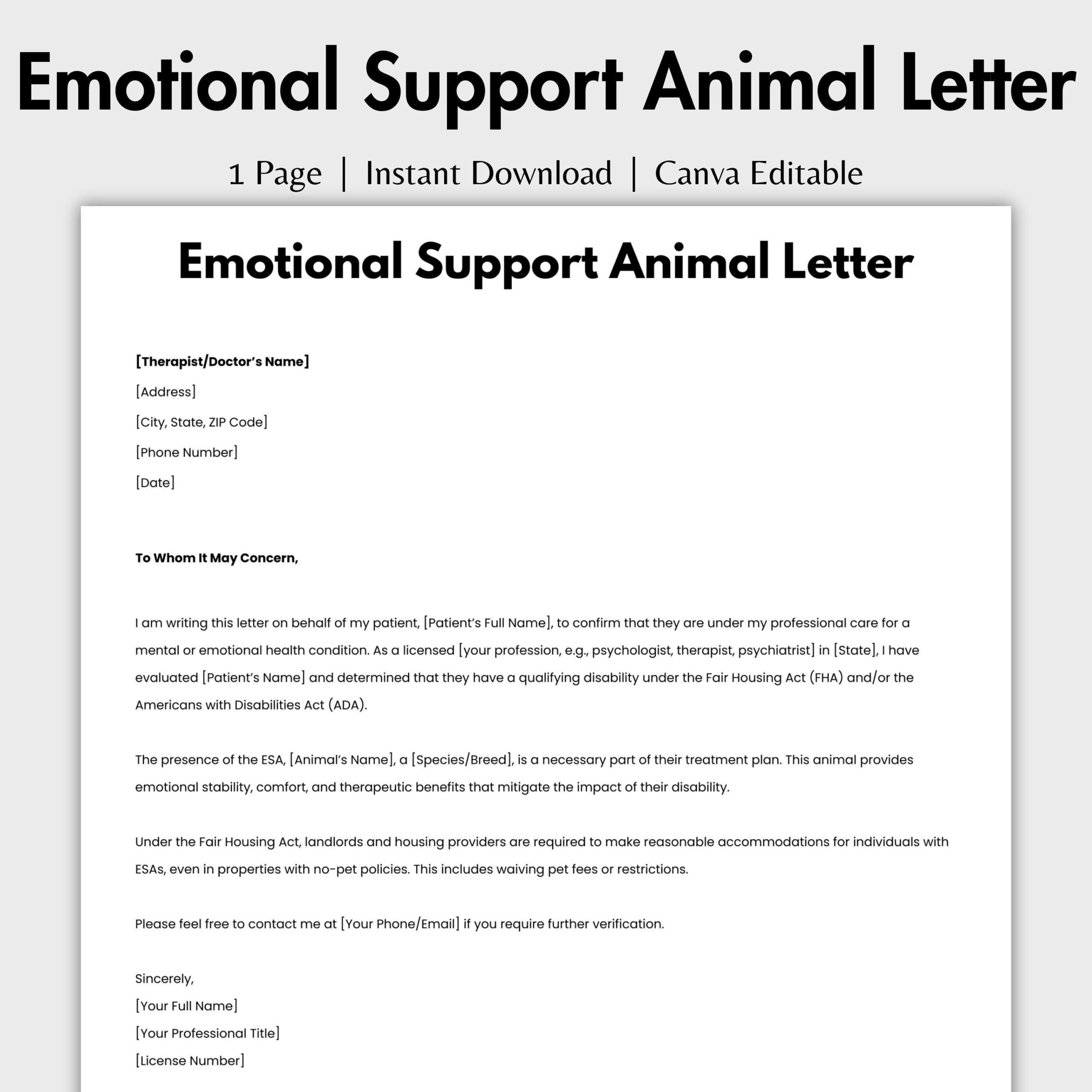
- Therapist’s Professional Credentials: This includes your full name, professional title, license number, the state in which you are licensed, and your contact information (practice name, address, phone number). This establishes your authority to make such a recommendation.
- Patient’s Identifying Information: Clearly state the patient’s full name. While not always required, including their date of birth can sometimes aid in identification, especially if common names are involved.
- Confirmation of Disability: State clearly that your patient has a mental or emotional disability that substantially limits one or more major life activities. You do not need to disclose the specific diagnosis (e.g., DSM-5 code), but you must affirm the presence of a disability as defined by relevant laws.
- The Nexus Between Disability and ESA: This is the most critical part. Explain how the emotional support animal alleviates one or more symptoms or effects of the patient’s disability. Describe the therapeutic benefit the animal provides, such as reducing anxiety, mitigating panic attacks, or providing comfort and companionship that improves overall mental health.
- Animal Type (Optional but Recommended): While not legally required to specify the type of animal, it can be helpful to briefly mention if it’s a dog, cat, etc., especially if the animal is already part of the patient’s life. However, avoid listing specific breeds unless medically relevant.
- Recommendation for Accommodation: Clearly state that you are recommending the emotional support animal as a reasonable accommodation necessary for the patient to use and enjoy their dwelling.
- Date and Signature: The letter must be current and bear your original signature, along with the date it was issued.
Crafting Your Esa Letter Template For Therapist Use: Best Practices
Developing a robust esa letter template for therapist purposes goes beyond merely listing required information; it involves an understanding of the legal landscape, ethical considerations, and the nuances of client care. As a mental health professional, your primary responsibility is to your patient’s well-being, and that includes providing documentation that is both effective and ethically sound. A template should serve as a dynamic tool, adaptable to individual client needs while upholding professional standards.
One crucial aspect is staying informed about current regulations. The Fair Housing Act (FHA) is the primary federal law governing ESAs in housing, and the Department of Housing and Urban Development (HUD) issues guidance that clarifies these regulations. Changes, even subtle ones, can impact the effectiveness of a letter. For instance, HUD’s guidance has increasingly emphasized the direct nexus between the disability and the animal, and has provided clarification on what constitutes a qualified professional. Your template should reflect the most up-to-date understanding of these requirements.
Furthermore, a good template should prompt therapists to consider the ethical dimensions of providing ESA letters. It’s essential to only write letters for legitimate clients with whom you have an established therapeutic relationship and a diagnosed disability that warrants an ESA. This means avoiding "certificate mill" requests or writing letters for individuals you haven’t properly evaluated. The template can include reminders or checkboxes to ensure these ethical benchmarks are met before the letter is issued.
Finally, while the letter needs to be formal, the language should also be clear and concise. Avoid overly clinical jargon where possible, as the primary audience will be housing managers, not other medical professionals. A well-designed template helps structure this communication effectively, ensuring that the letter is easy to read, difficult to misinterpret, and clearly conveys the necessary information without oversharing sensitive patient details. It’s about striking a balance between providing enough information to justify the accommodation and respecting patient privacy.
The careful preparation of an ESA letter ensures that individuals with mental or emotional disabilities can receive the support they need from their animal companions without undue obstacles. By utilizing a comprehensive and legally sound template, mental health professionals can confidently provide this vital documentation, knowing they are serving their clients ethically and effectively. This structured approach not only saves time but also enhances the credibility and validity of the support provided.
